
As educators, we often hear that trauma-responsive classrooms begin with nurturing trust, cultivating relationships, building classroom community, and supporting children’s social and emotional needs. These are all essential. But there’s another layer that’s just as vital (and often overlooked): the physical environment.
The visual landscape of a classroom can either support or sabotage a child’s ability to regulate. For children who have experienced trauma, sensory overload isn’t just uncomfortable; it’s dysregulating. Their nervous systems are already working overtime, scanning for safety, decoding social cues, and managing internal stress. When the classroom itself becomes a source of overstimulation, even the most well-intentioned design can backfire.
The Pinterest Paradox
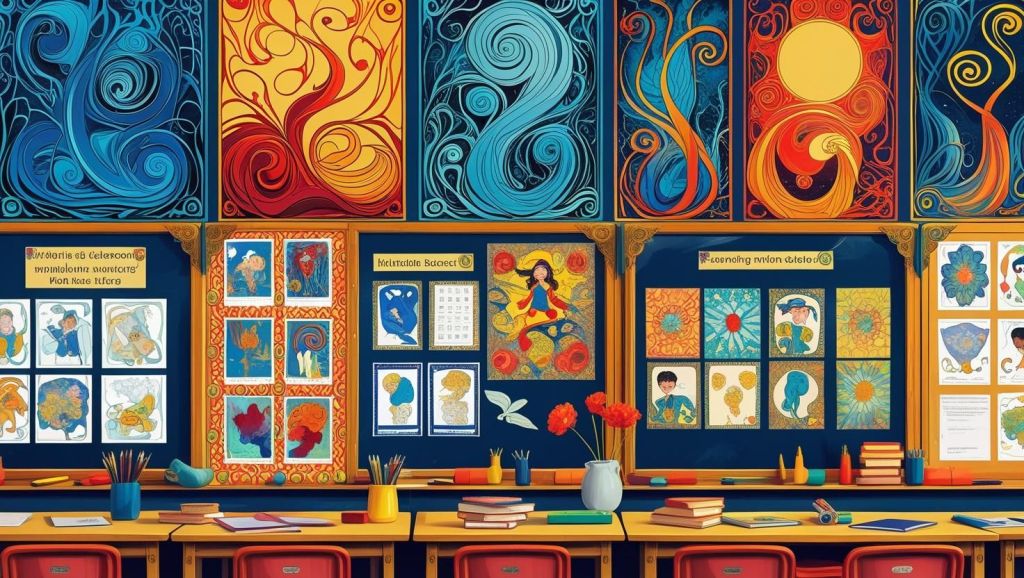
This is the time of year when teachers across the country begin setting up their classrooms for the new school year. They spend hours arranging furniture, hanging up educational posters, word walls, and motivational quotes. They create bulletin boards to welcome students or display their work. Bright, primary-colored bins line their shelves. In their minds, they are creating rich, engaging learning environments.
But for many children, especially those affected by trauma, these Pinterest-worthy spaces can feel more like sensory battlefields. The visual clutter, competing colors, and constant stimuli can overwhelm their already taxed nervous systems.
So, what’s a teacher to do? We aren’t suggesting throwing everything out or sitting in sterile, empty classrooms. Instead, we invite you to design with regulation in mind.
Tips for Creating Trauma-Responsive Visual Environments
1. Minimize visual clutter strategically: This does not mean having blank walls. Rather, be intentional when adding things to your walls
- Use solid, neutral backgrounds for displays rather than bright, patterned papers that compete with the actual content
- Display student work in empty picture frames to create visual boundaries
- Rotate displays based on current learning rather than showcasing everything at once
2. Consider the “20-foot rule”: If students can’t read or use the information from 20 feet away, it’s probably not serving its intended purpose (and is likely adding to visual clutter).
- View displays from different student seats to ensure they are accessible to everyone.
- Ask yourself, “Is this helping students learn or just filling space?”
3. Choose lighting that responds to sensory differences: Lighting can dramatically impact mood, alertness, focus, and overall well-being.
- Open the blinds and let in natural sunlight
- Replace harsh fluorescent overhead lights with warm table lamps, floor lamps, or decorative twinkle lights
- Design lighting zones to support the needs of different students, as some children may thrive in well-lit spaces, while others feel safest in softer, dimmer corners
- Adjust lighting to fit the time of day or activity, such as brighter lights in the morning or for detailed work, and dimmer lights after lunch or for story times
4. Incorporate natural elements: Bringing in nature can have powerful calming effects on students.
- Add plants to provide greenery and improve air quality
- Consider an aquarium with soft, glowing lights and gentle bubbles
- Display items collected from nature walks (rocks, leaves, pinecones, shells, sticks, acorns, etc.) for softer textures and colors
The Environment is the Third Teacher
Creating trauma-responsive classrooms isn’t just about what we teach. It’s also about where we teach. As Loris Malaguzzi, founder of the Reggio Emilia approach, stated: the environment is the third teacher. This is a powerful reminder that our spaces teach alongside us. When we design spaces that soothe rather than stimulate, we help all children feel safe enough to learn, connect, and thrive.
(Image Credit: Canva AI Generator)
Want to learn more about minimizing visual clutter and designing effective, trauma-responsive environments? Keep an eye out for the upcoming book From Breakdowns to Breakthroughs: 10 Simple Strategies to Reduce Disruptions and Create Trauma-Responsive Classrooms by Dr. Katie Fields and Dr. Jill Davis.
Eager for a sneak peek? Sign up as a beta reader to gain early access


 Dr. Jill Davis
Leave a comment