
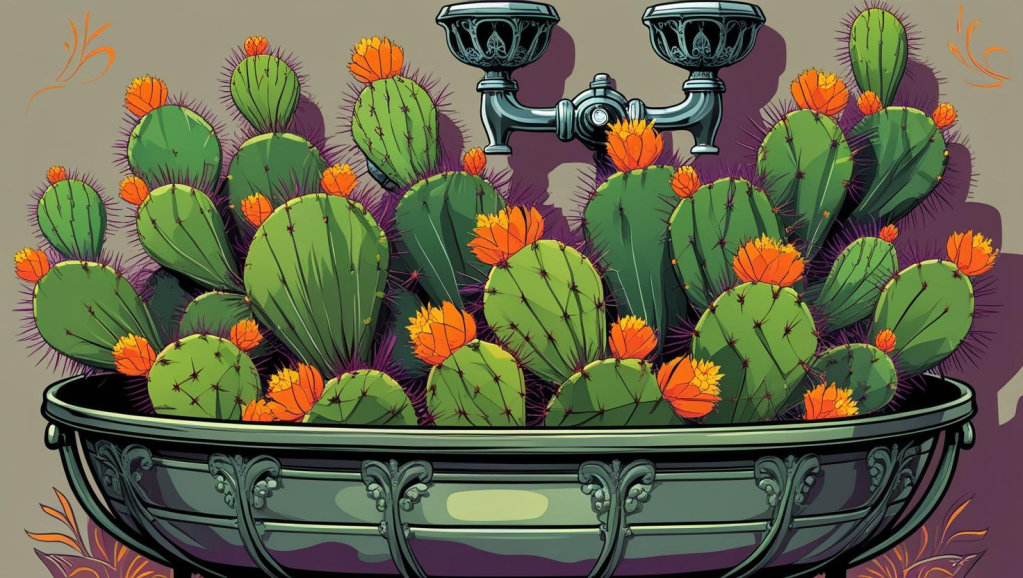
I have two large, raised beds in my backyard that are filled with prickly pear cacti. What began as a few small pots eventually outgrew their containers and were transplanted into metal troughs. I had tried growing flowers there without much luck. After one of my dogs got a face full of spines (twice in one day), I decided to move them from their pots to higher ground for safety.
What I had not anticipated was that one of the beds sat right in front of the outside water faucet. As the succulents grew, accessing the faucet became a challenge. I had to carefully maneuver my arm around the pads to avoid the spines—or worse, the tiny, hairlike glochids that embed in your skin in small clumps. The darker ones are easy to remove with a pair of tweezers. The white ones? Nearly impossible.
This summer, it got to the point where every time I turned on the hose to water my sunflowers and tomatoes, I ended up with a handful of glochids. I would finish my watering—sometimes one-handed—and head right toward my trusty pair of tweezers.
Eventually, it hit me: I could just trim the cactus. So, I grabbed an old pair of tongs and removed several pads, clearing a path to the faucet.
This experience mirrors the journey of many advocates.
At first, the efforts start small, much like the small cacti in the pots on the ground. Maybe it was just a few conversations, phone calls, or social media posts. It was contained, intentional and handled with care. But as your confidence grows, so does your advocacy. Like the cactus in the raised beds, it becomes more visible and expansive, and it thrives.
Then come the unintended consequences.
Just as the catus blocked the way to the water faucet, advocacy can sometimes grow in ways that obstruct connection. We become so focused on our cause that we forget to make space for collaboration, or reflection, or rest. Our message becomes too sharp, or our strategies too rigid.
Still, we keep reaching for the faucet, because the sunflowers and tomatoes, the communities we serve, and changes we seek, still need water. We adapt. We work around the obstacles and discomfort, even when it stings.
And finally, one day we realize: we can prune.
We can trim back the strategies that no longer serve us. We can reposition our advocacy, so it does not block the faucet of connection, empathy, or sustainability.
The point is that advocacy, much like gardening, requires regular tending. What once protected can become obstructive. What once felt bold can become brittle. The key is knowing when to pause, assess, and prune so our efforts nourish rather than hinder the change we seek.
(Image Credit: Canva AI Generator)


 Dr. Jill Davis
Leave a comment