
Each week, my university distributes a report comparing class enrollment for the upcoming semester to the same point in time last year, highlighting year-over-year changes in both numbers and percentages. These reports are broken down by each department and college, offering a snapshot of institutional trends.
While intended to inform, these updates often weigh heavily on me. As the coordinator of a relatively new graduate program, it is difficult not to feel pressured to outperform last year’s metrics. But the truth is, enrollment shifts aren’t always within our control.
Enrollment numbers are influenced by a variety of factors. Financial aid opportunities come and go. University budgets change. Programs and resources are added and cut. Students’ personal, professional, and economic realities evolve. And now, we’ve hit the much-discussed “enrollment cliff”—the projected decline in university enrollment nationwide due to the lower birth rates following the Great Recession. These are factors that I cannot control.
But here is a factor that I can control. I show up. I keep creating and sending flyers, hosting information sessions, and connecting with prospective students. I offer individual support, share professional advice, and cheerlead our current students. Why? Because I believe the effort matters.
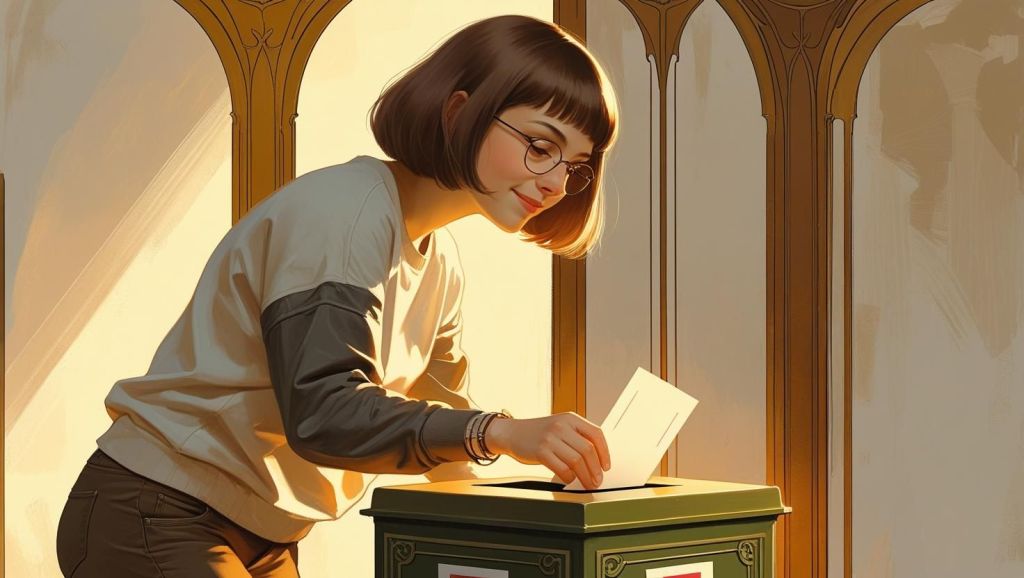
It reminds me of voting. I can’t control all of the factors influencing enrollment, just like we cannot control every variable in our democracy. But we can choose to engage.
Unfortunately, many people in our country do not vote. They’re discouraged by long lines, underwhelmed by the choices, or convinced that their single vote doesn’t matter. But voting is foundational to our democracy. When people abstain, entire communities lose their voice. Often, it’s historically marginalized groups who are most impacted and underrepresented.
The U.S. consistently ranks behind other democracies in voter turnout. In my state, only about 53% of eligible voters participated in the last presidential election. This is 10 points below the national average, making us dead last in the nation. Turnout in non-presidential elections is even more dismal.
Historically, we know the power of one vote.
In the 1800 election between Thomas Jefferson and Aaron Burr, a single vote broke the tie. While Lin-Manuel Miranda portrayed Alexander Hamilton as the one who cast the deciding vote, it was actually James A. Bayard of Delaware. (A note to fellow musical theater lovers: Historians do say that Bayard might have been influenced by Hamilton’s claims that Burr was a “man of extreme & irregular ambition”.)
Our votes have had power in more recent elections:
- In 2000, George W. Bush won Florida, the deciding state in the electoral college, by 537 votes—that’s 0.009%!
- In 2014, two races for Kentucky city boards were tied and settled by a coin toss.
- Between 2016-2017, Ohio saw 70 state and local elections decided by one vote or ending in a tie.
- In 2018, a State House seat flipped by just one vote.
- In 2020, Donald Trump won North Carolina by 1.34 percentage points—an average of about 28 votes per precinct.
For other examples, check out “10 Instances Where One Vote Changed the World” and “11 Elections Decided By One Vote (or Fewer)”.
There’s a saying: “You can’t complain if you don’t vote.” While I’ve definitely heard plenty of complaints from non-voters, the sentiment still holds weight.
There are plenty of reasons why people don’t vote, or recruit that next student, launch that next campaign, or write that next email. But here’s why we must:
Because change depends on our participation.
Whether we’re recruiting future educators or choosing our leaders, the message is the same: your voice matters. Your efforts matter. Keep showing up because systemic change begins with intentional action.
As public policy professor Asher D. Hildebrand wrote just before the last presidential election:
“The 2024 election will be decided not by the committed voters who are still making up their minds about how to vote, but by Americans who are still making up their minds about whether to vote at all.”
(Image Credit: Canva Image AI)


 Dr. Jill Davis
Leave a comment